

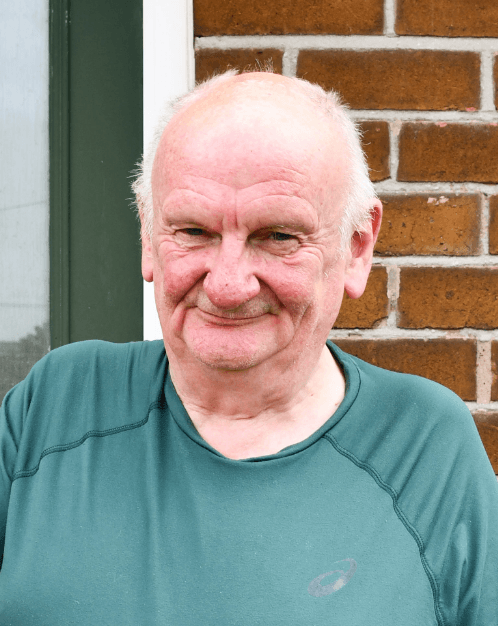

Bradford: Cancer Screening Could Save Your Life
Cancer screening uptake is significantly lower in parts of Bradford District and Craven, particularly in areas experiencing higher deprivation and within some ethnically diverse communities. This contributes to later diagnoses and poorer outcomes, despite people being eligible for free NHS screening.
Bradford District and Craven Health and Care Partnership commissioned Magpie to design and deliver a behaviourally informed campaign to increase understanding, confidence and intention to attend bowel, breast, cervical and lung cancer screening.
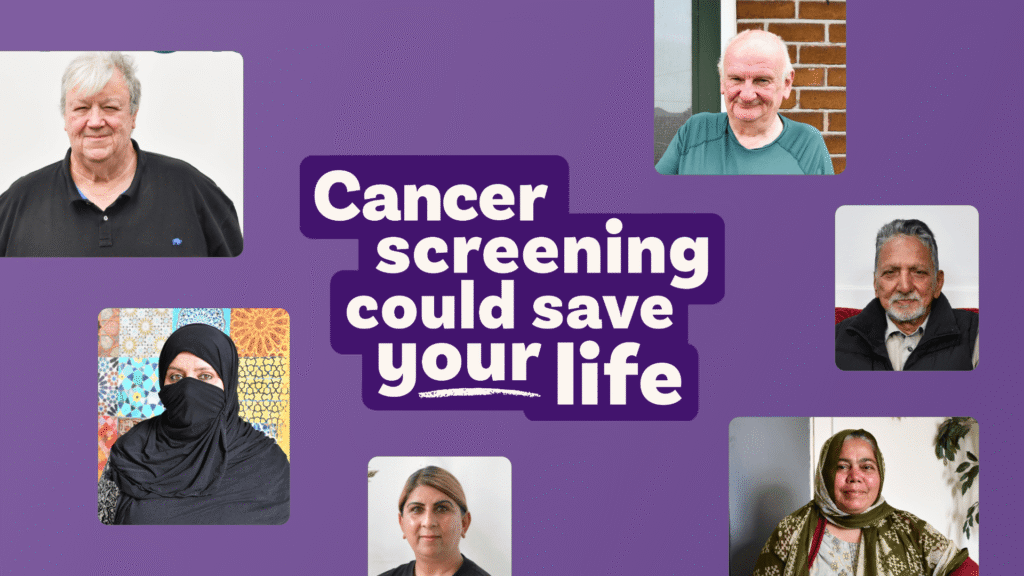
The result was Cancer Screening Saves Lives: a digital-first, insight-led campaign that tackled emotional, cultural and practical barriers to screening, while demonstrating how targeted digital delivery can achieve equitable reach, strong engagement and value for money at scale.
Date
September 2025 - January 2026
Client
Bradford District and Craven Health and Care Partnership
Scope of work
- Behavioural diagnosis
- Behavioural Insights
- Campaign development & activation
- Clear communication of complex insights
- Digital Engagement
- Digital Strategy
The challenge
Local data and previous campaign learning showed that many people who were eligible for cancer screening were not attending when invited. This was not simply an awareness issue.
For many communities, cancer screening felt confusing, uncomfortable or irrelevant. Screening was often associated with illness rather than prevention, leading to a widespread belief that it was only necessary if symptoms were present. Fear, embarrassment and anxiety about procedures were common, alongside fatalistic beliefs about cancer and concerns about privacy, dignity and being judged.
Low health literacy and language barriers added further complexity, as did cultural taboos around cancer and intimate health. Even when people agreed that screening was important, practical concerns around time, convenience and fitting appointments into everyday life often led to delay or avoidance.
Traditional, clinical messaging alone was not addressing these layered barriers. A different approach was needed, one that could build trust, normalise concerns and make screening feel relevant, manageable and worthwhile.
Insight and behavioural understanding
We began with a review of local data, national evidence and previous campaign performance, alongside qualitative insight gathered with residents and community leaders across Bradford District and Craven.
Using a COM-B behavioural diagnosis, we identified the emotional, social and practical barriers most likely to prevent follow-through. This allowed us to move beyond surface-level awareness and focus on the emotional and social drivers that shape real-world decisions.
Key insights included a lack of clear understanding about what screening involves and why it is offered when people feel well, strong emotional barriers such as fear and embarrassment, and a clear preference for relatable, peer-led information over formal clinical messaging. Reassurance, privacy, convenience and trust in healthcare professionals emerged as particularly important motivators, especially for bowel and cervical screening.
These insights shaped every aspect of the campaign, from messaging and creative formats through to channel choice and targeting.

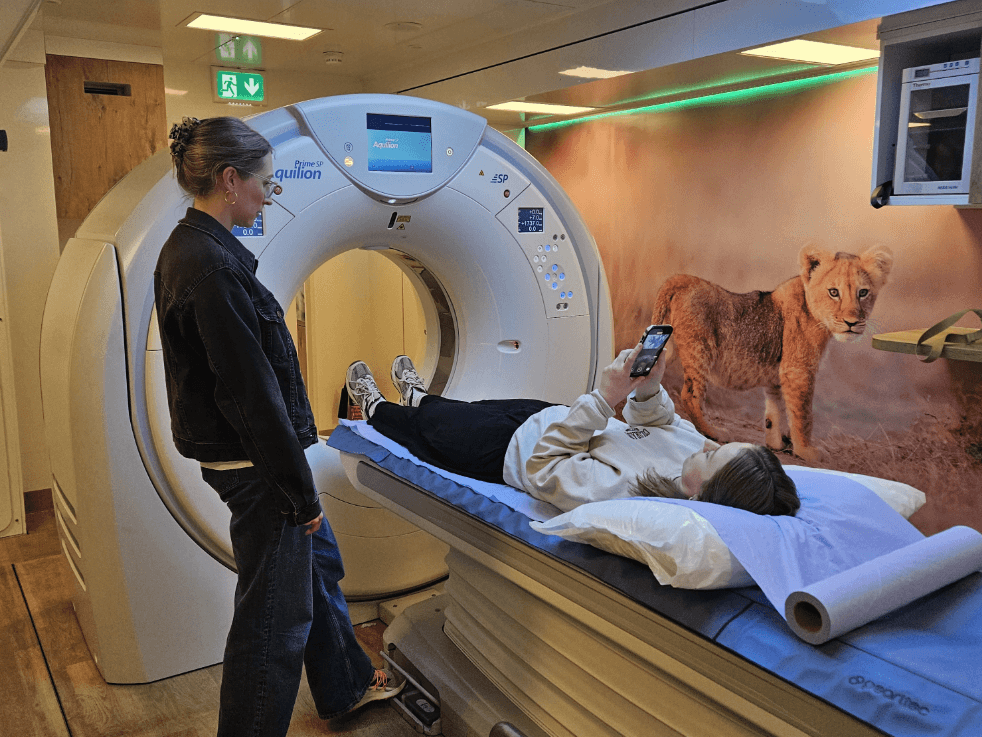
Community Cohesion
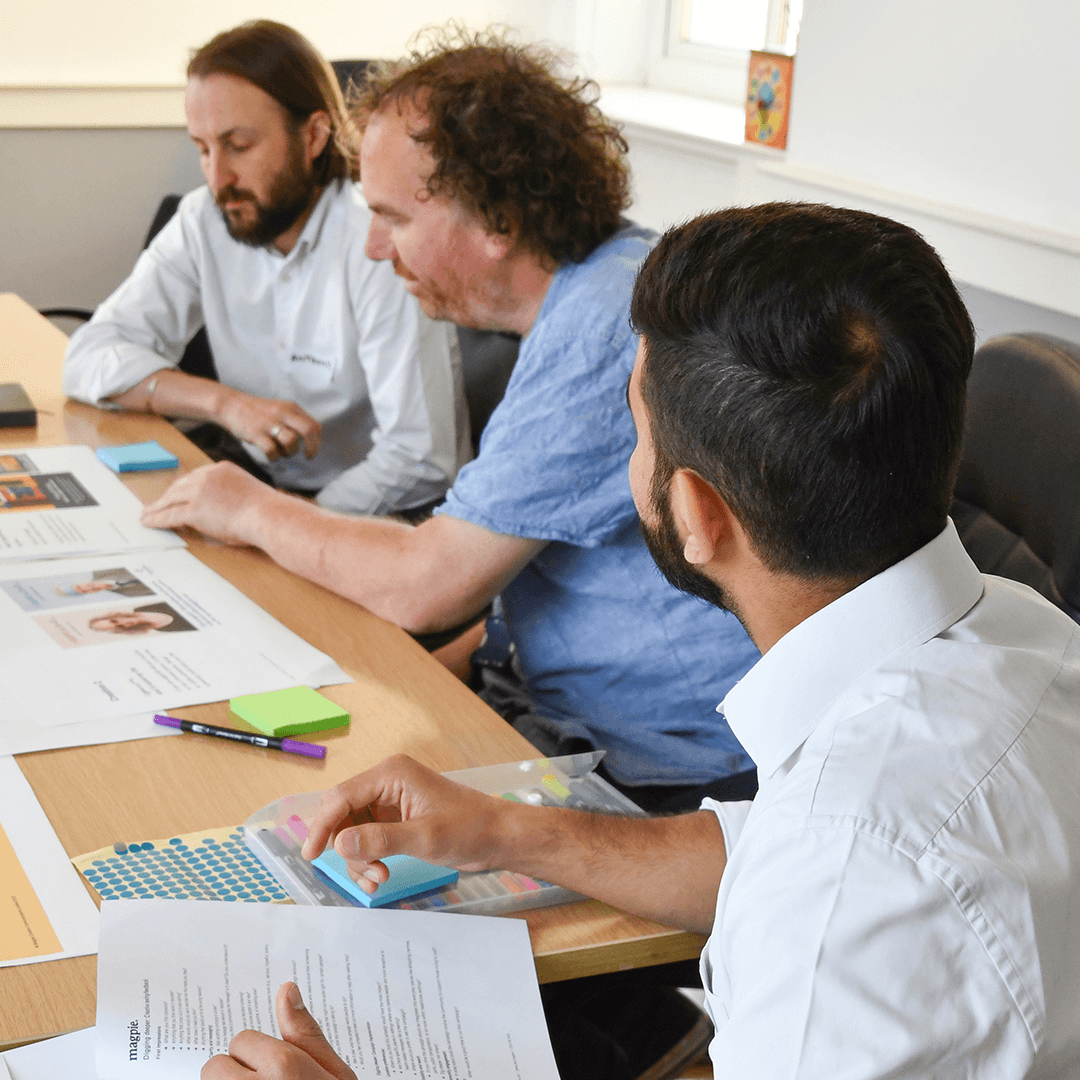
We held a community cohesion event to bring together those who care about the residents of Bradford and their health. We gave them time to connect as a group, engaged them in cancer screening, and held focus groups on messaging and the campaign visuals.
In total we spoke to 45 people.


Our approach
We developed a digital-first, multi-channel campaign designed to show that screening is routine, manageable and beneficial, rather than frightening or exceptional.
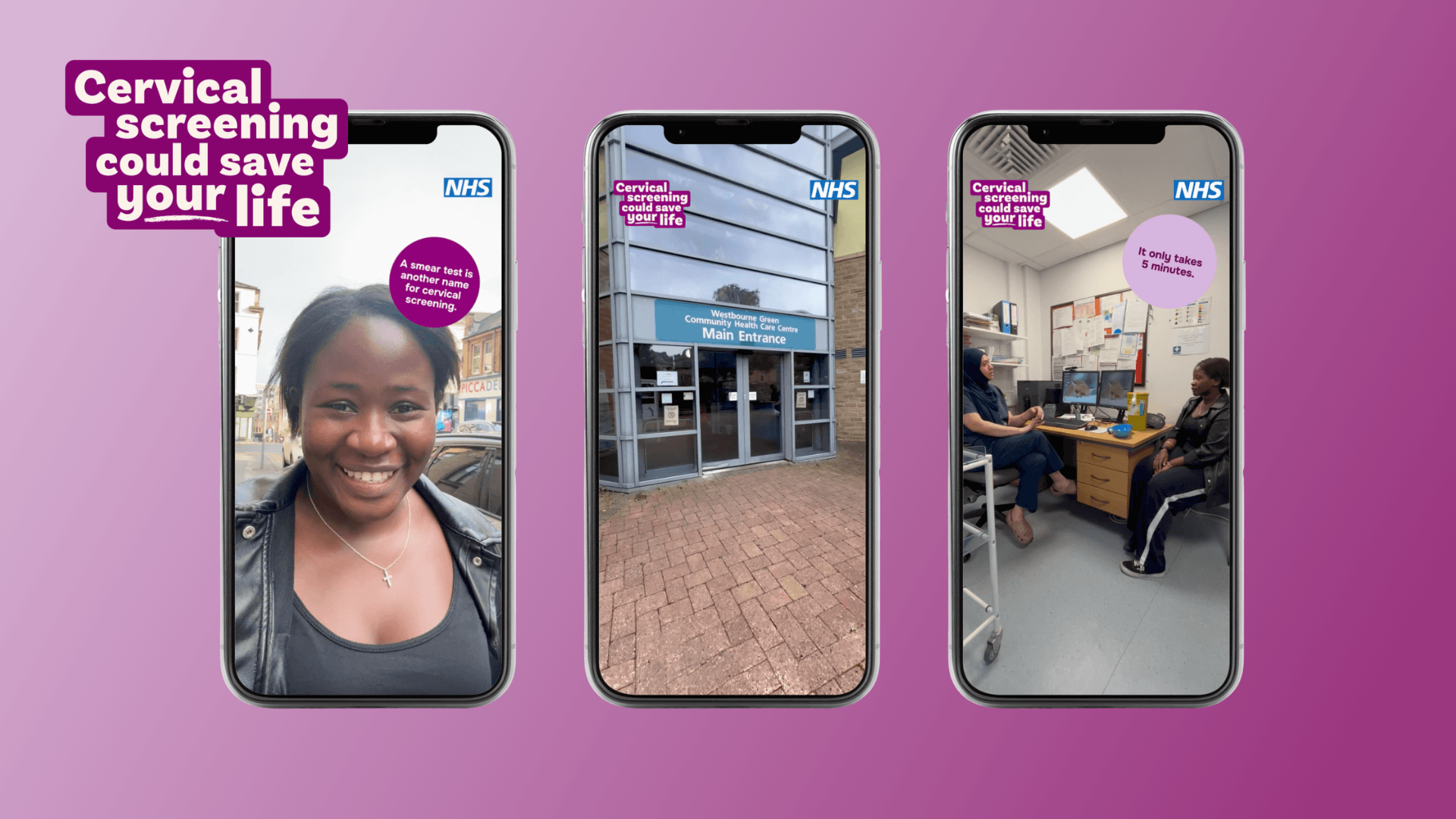
Digital delivery allowed us to target postcodes and demographic groups with historically lower uptake, tailor messaging by screening type, and optimise creative in real time based on performance. Meta platforms were prioritised for bowel, breast and lung screening to reach older audiences, while TikTok and Instagram were used to engage younger women around cervical screening in more native, peer-led environments.
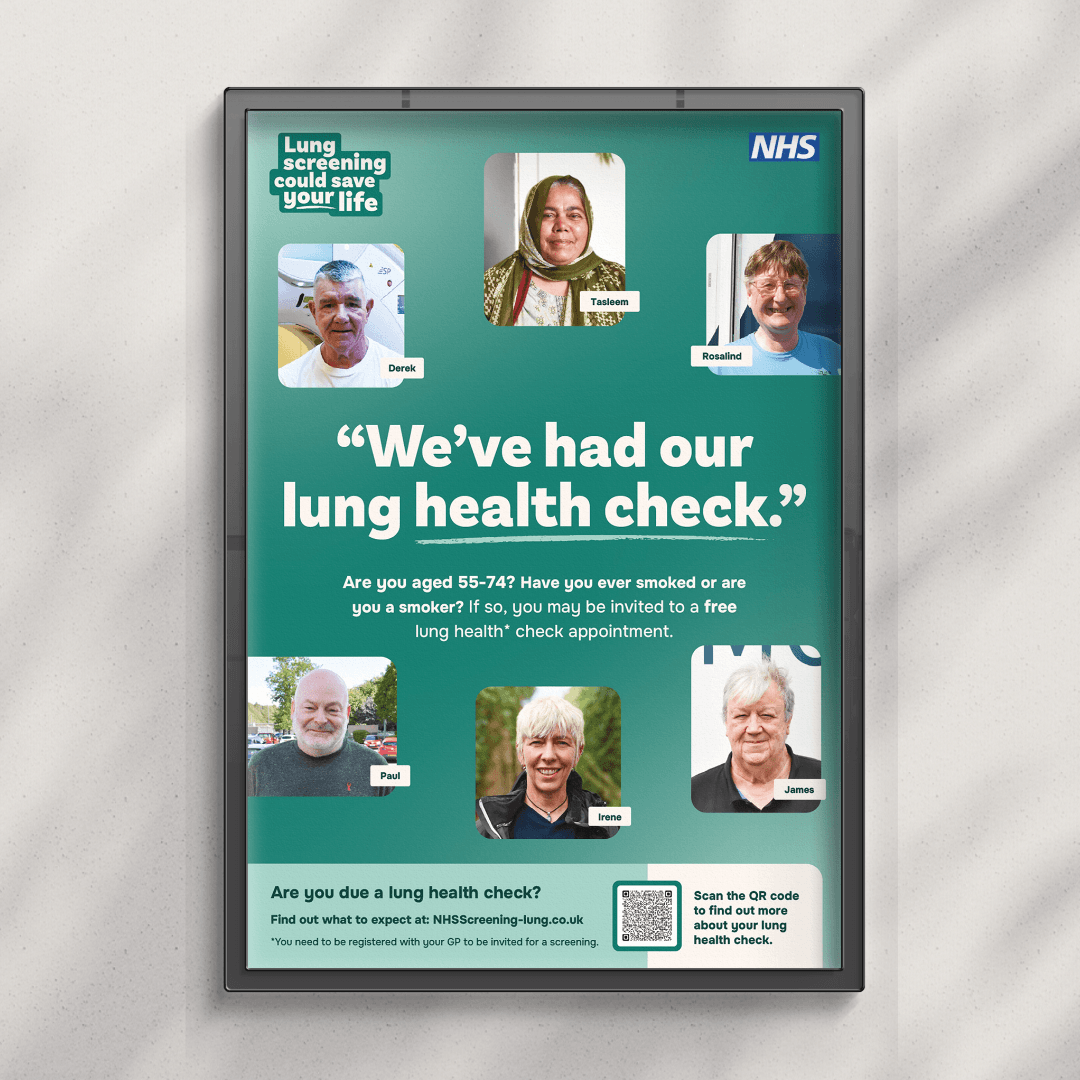
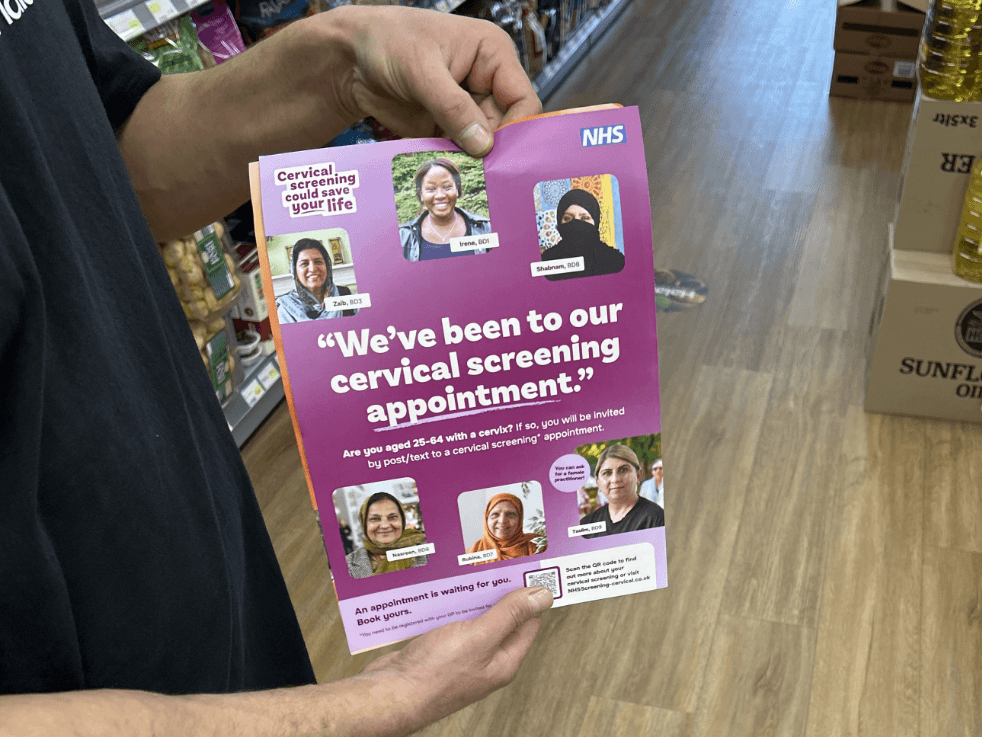
The campaign was supported by print and community-distributed materials, ensuring messages could be shared through trusted local networks and reinforcing digital activity on the ground.
Bowel Screening Case Study
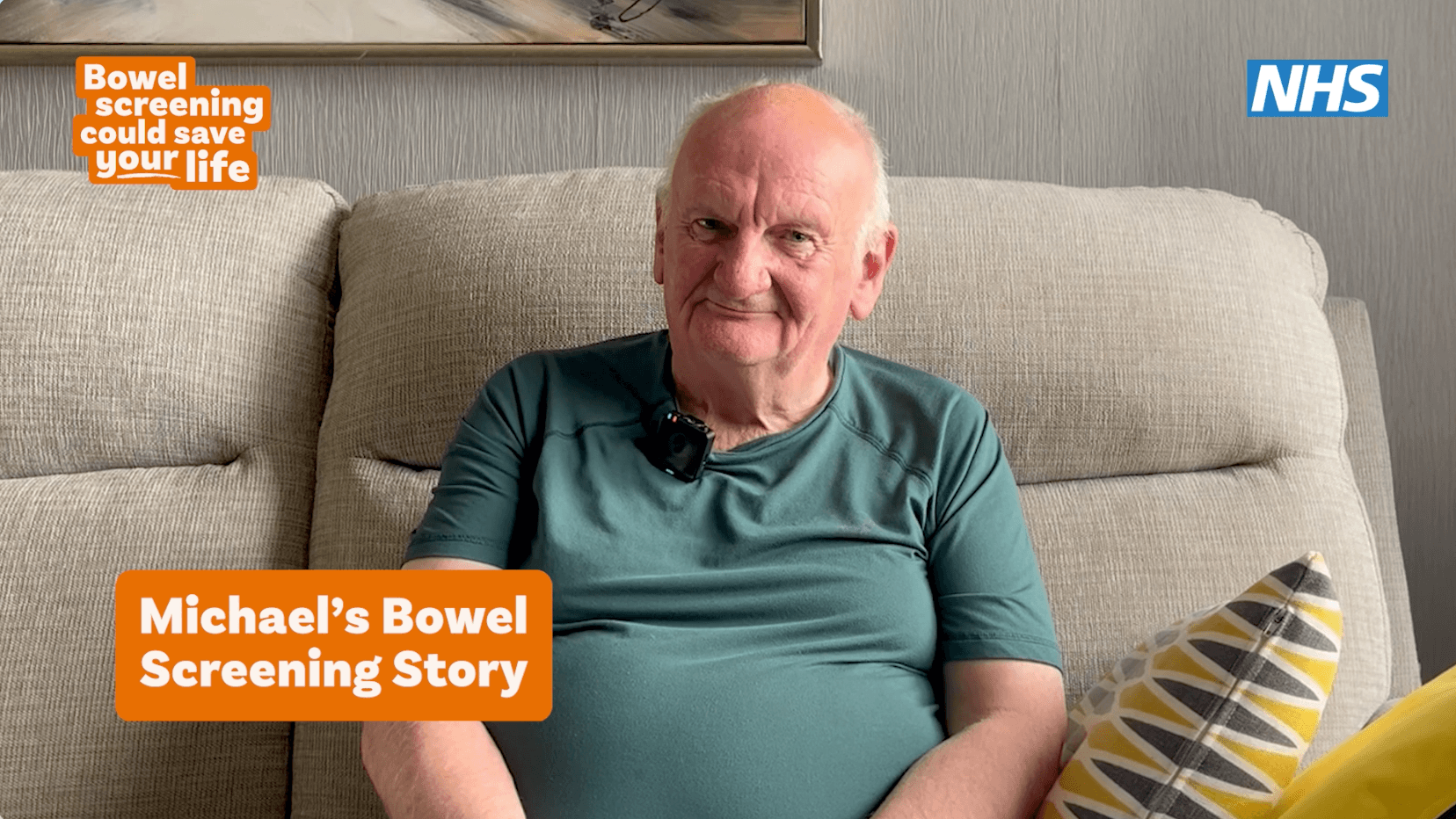
Creative that reduced fear and built trust
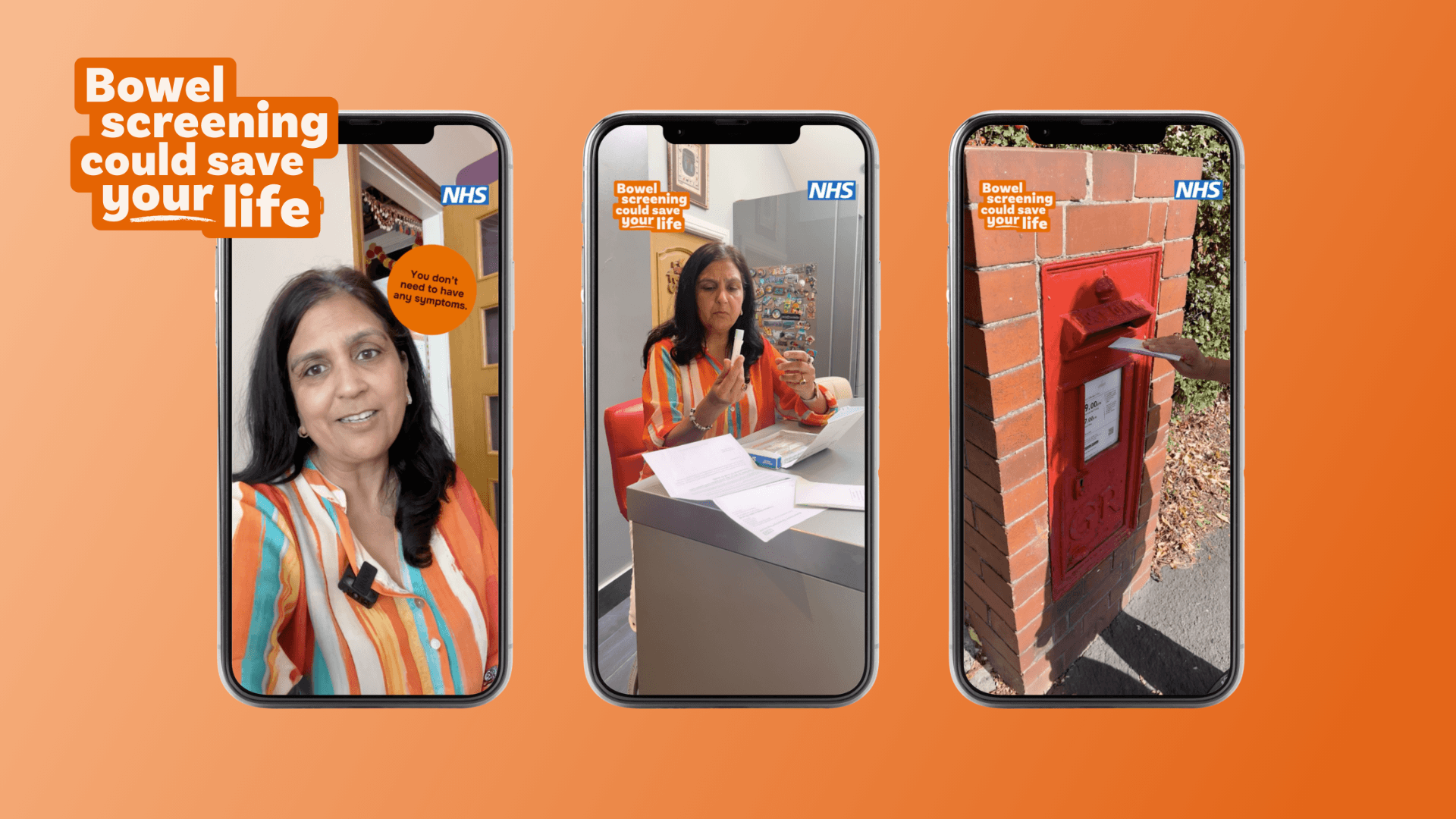
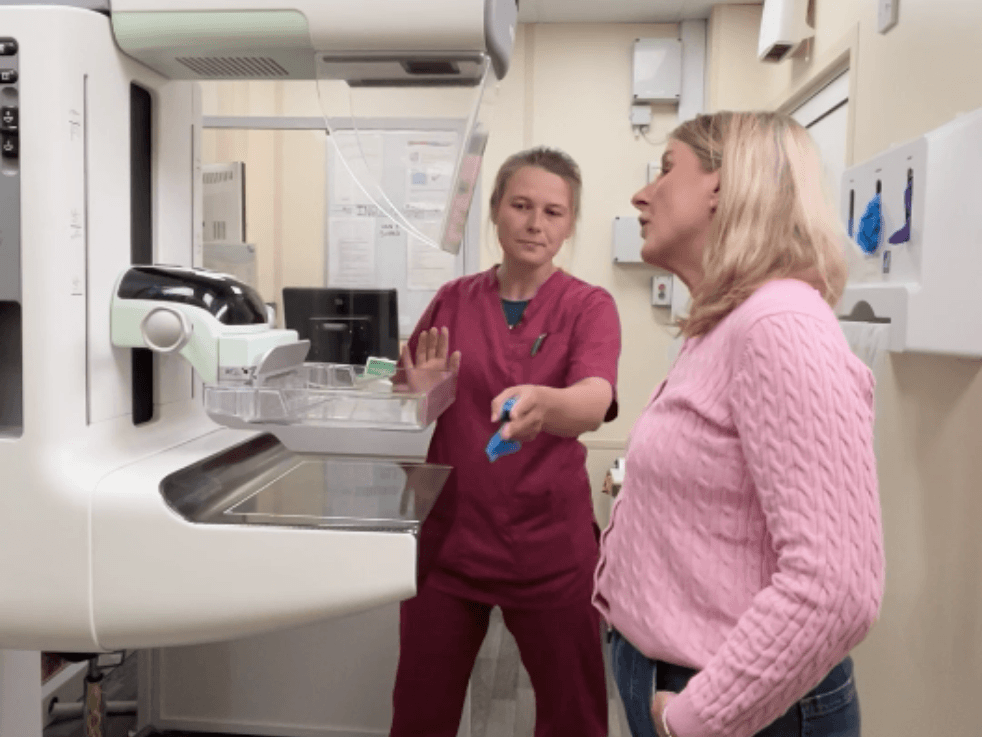
Creative focused on clarity, reassurance and relatability. We used plain English to explain what screening is, who it is for, what happens during appointments or tests, how long it takes, and why it matters even when you feel well.
Rather than relying on statistics, messaging emphasised peace of mind, early detection and positive outcomes. Concerns around embarrassment, discomfort and privacy were acknowledged and normalised, not dismissed.
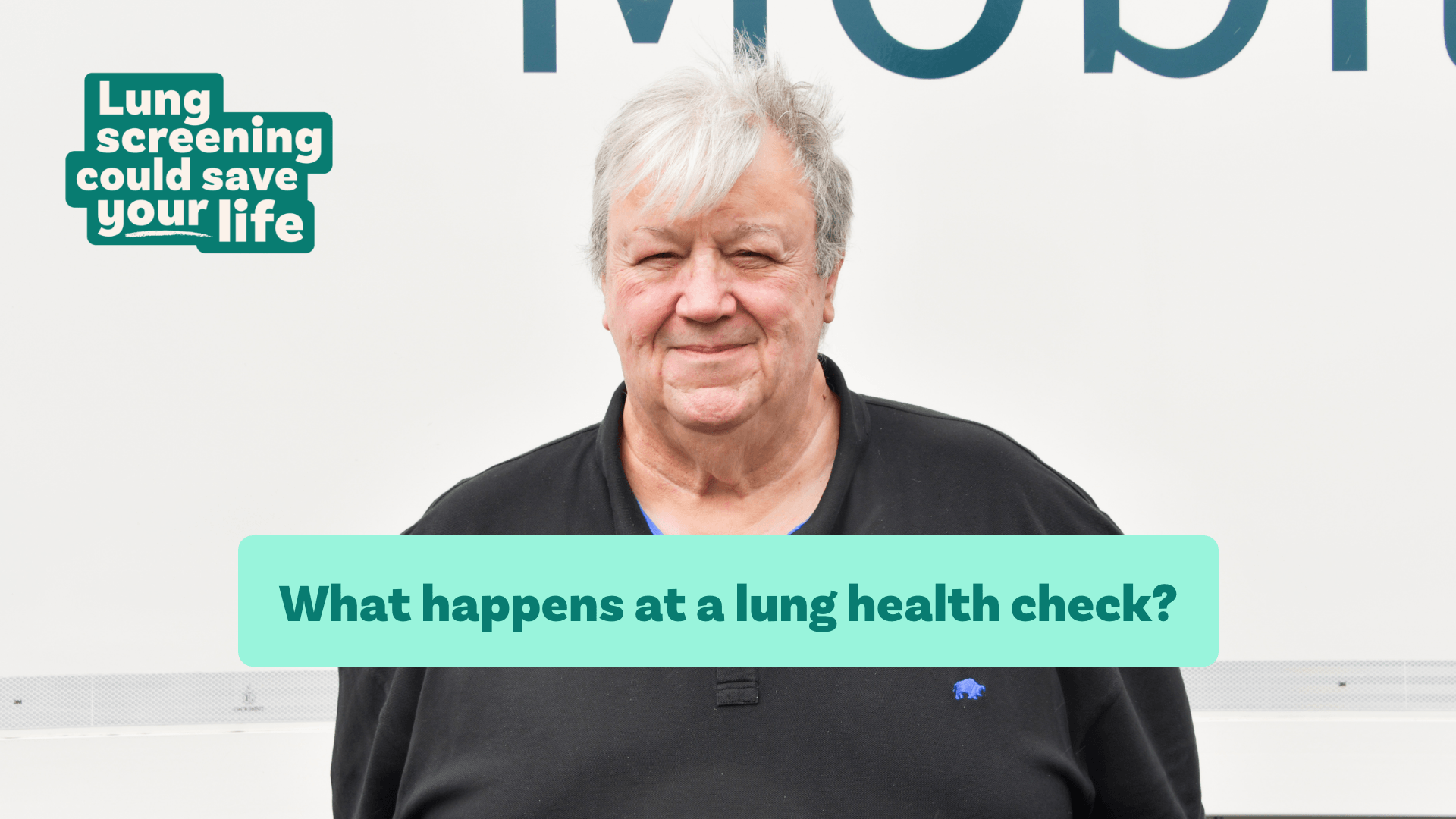
To address fear and uncertainty, we prioritised formats that showed the screening process rather than simply describing it. Point-of-view videos allowed people to ‘come along’ to appointments or see how home test kits work, helping demystify the experience. Lived experience case studies featured real people sharing their screening stories, providing social proof and building trust by showing positive, respectful interactions with NHS services.
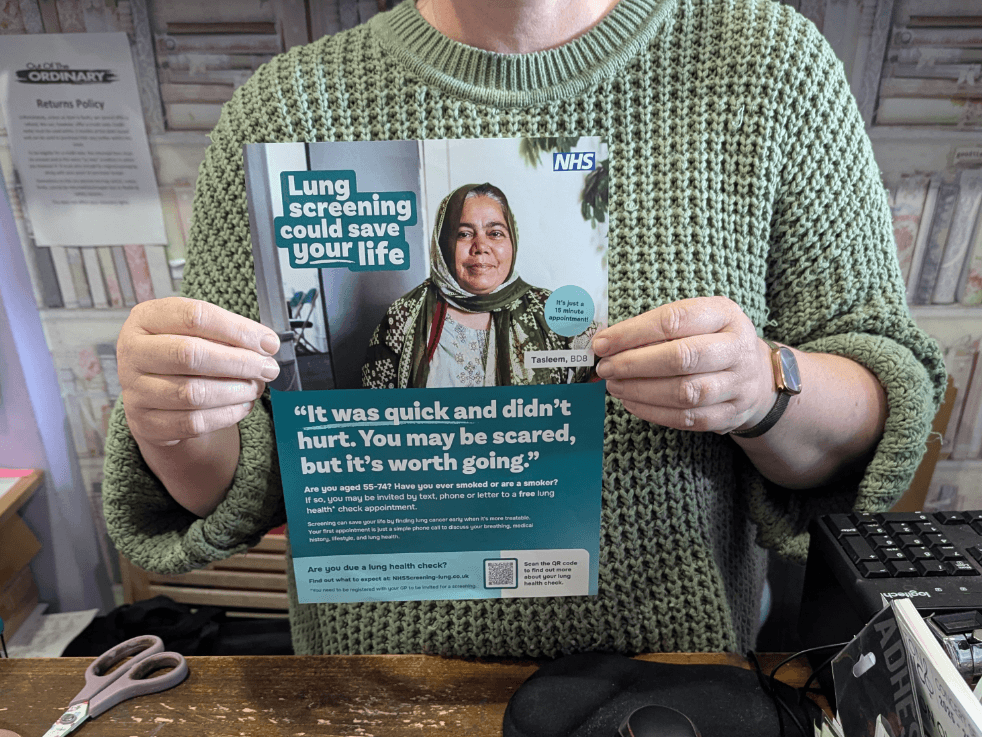
What happens at a lung health check?
Delivery
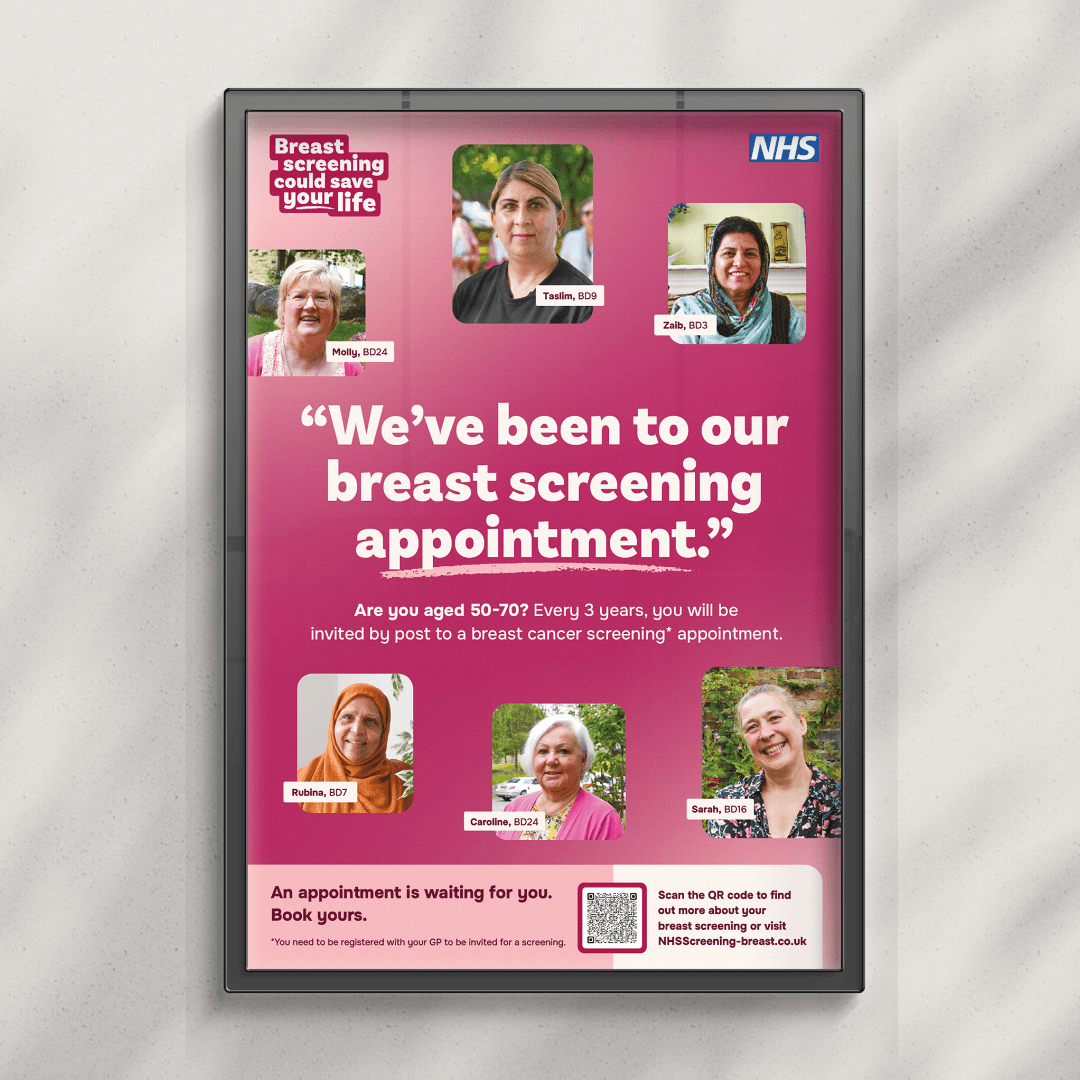
The campaign ran across digital channels with tailored creative for each screening type, supported by print materials distributed through community organisations. Clear calls to action and reminder messaging encouraged follow-through, helping people act on their invitation rather than putting screening off.
This flexible, digital-first delivery model allowed us to maintain consistency while adapting messaging to different audiences, platforms and behaviours.
Watch the Lung Health Check video
Watch the Cervical Screening video
Watch the Breast Screening video
Watch the Bowel Screening video
Results
The campaign delivered strong performance across all platforms, exceeding targets and demonstrating the effectiveness of a behaviourally informed digital approach.
Cost efficiency exceeded expectations, reinforcing the case for digital, insight-led delivery as a cost-effective approach for public health teams working under budget constraints.
These results show that insight-led creative, delivered through the right channels, can achieve both scale and depth of engagement with priority audiences.
2.3 million impressions
ensuring repeated exposure to screening messages across priority postcodes and communities with historically lower uptake.
40,000 website visits
showing strong intent to find out more about screening and what to expect.
170,000 meaningful video views
indicating sustained attention to content designed to demystify screening and reduce fear and uncertainty.
443,079 engagements
reflecting high levels of interaction with reassurance-led messaging that normalised concerns and built trust.We held a community cohesion event to bring together those who care about the residents of Bradford and their health. We gave them time to connect as a group, engaged them in cancer screening, and held focus groups on messaging and the campaign visuals.
In total we spoke to 45 people.
What we learned
This campaign reinforced the importance of addressing emotional and cultural barriers alongside information. Making screening visible through real experiences helped reduce fear and normalise attendance, while plain English explanations proved essential where health literacy was low.
The work also demonstrated that digital channels can deliver equitable reach when targeting and creative are informed by behavioural insight, and that frameworks such as COM-B provide a robust foundation for scalable, evidence-based public health campaigns.
Why it matters
Cancer Screening Saves Lives shows that a behaviourally informed, digital-first approach can help tackle inequalities in cancer screening uptake while delivering measurable impact and value for money.
The approach is scalable and adaptable, offering a practical model for NHS organisations, local authorities and cancer charities looking to improve engagement with screening and other preventive health services, particularly in underserved communities.
Want to improve cancer screening uptake in your area?
We work with NHS teams, local authorities and cancer charities to design behaviourally informed screening campaigns rooted in evidence, insight and community engagement.
If you are looking to improve cancer screening uptake, or address inequalities in prevention and early diagnosis, we would love to talk.
Get in touchSee more projects:
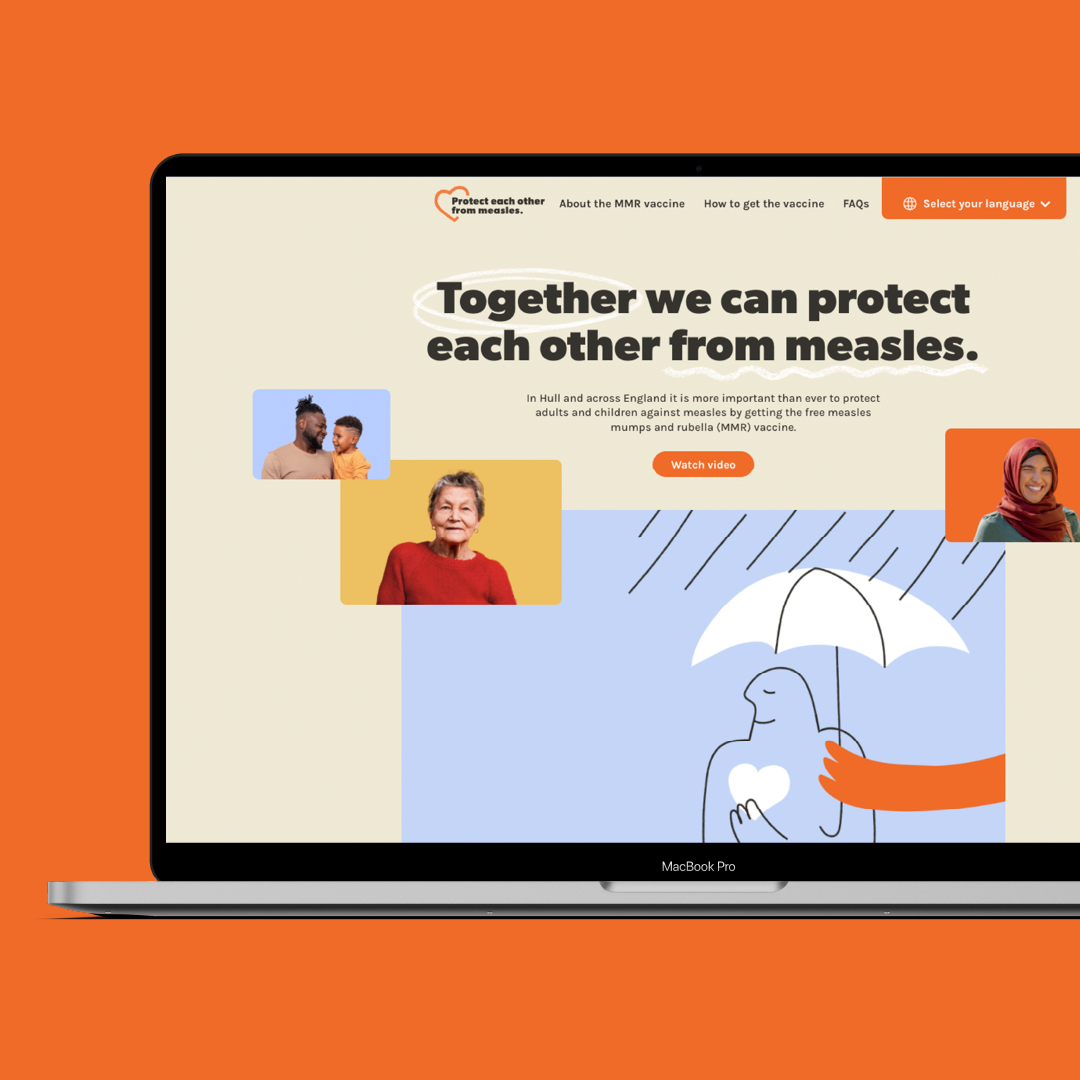
Addressing MMR vaccine hesitancy in underserved communities
Read more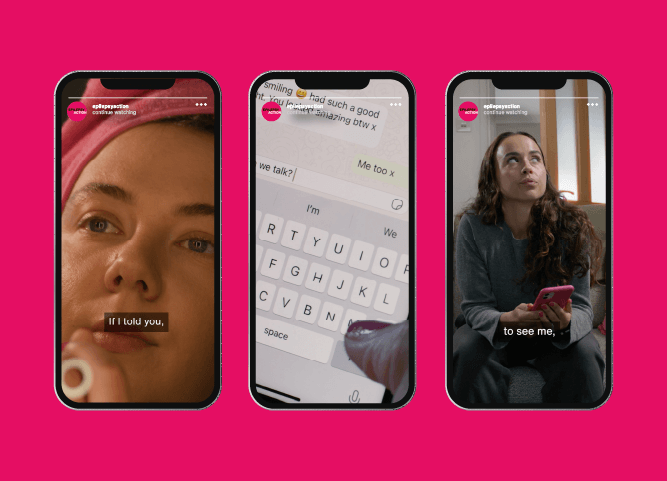
Breaking stigma around epilepsy
Magpie partnered with Epilepsy Action to deliver a bold charity behaviour change campaign that reached 1.8 million people, sparking more open conversations about epilepsy. By combining behavioural science with emotional, digital-first storytelling, the ‘If I Told You…’ campaign challenged stigma, engaged new audiences, and empowered people living with epilepsy to feel understood, supported, and able to speak confidently about their condition.
Read more