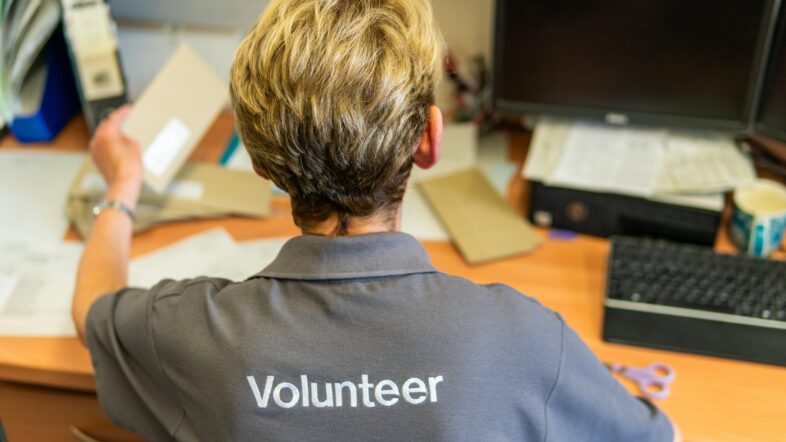
New research reveals volunteers want more ownership, stronger connections and greater opportunities to use their skills
Volunteers are often described as the heartbeat of charities and community organisations. They give their time, energy and expertise to causes they care about, helping organisations create positive change every day.
But how often do we stop and ask volunteers what they really want from their experience?
To mark Volunteers’ Week 2026, we spoke with 26 volunteers from a range of voluntary, community and social enterprise organisations across Leeds and Yorkshire. Through conversations, questionnaires and WhatsApp discussions, we explored what volunteering means to them, how they connect with their chosen cause and what organisations can do to better support them.
Our work with organisations including British Heart Foundation, RSPCA, Epilepsy Action, Barnardo’s, Shelter, Rewilding Britain, Mind and Terrence Higgins Trust has shown us that volunteers are often much more than supporters. They are advocates, connectors, mentors and trusted voices within their communities.
What we heard through this research reinforced that belief.
Volunteers see themselves as partners, not just helpers
When we asked participants how they viewed their role, responses were split evenly across three groups:
- One third identified as a ‘helper’, focused on supporting day-to-day activities
- One third identified as an ‘advocate’, actively sharing information and raising awareness
- One third identified as a ‘partner’, feeling responsible for the organisation’s long-term success
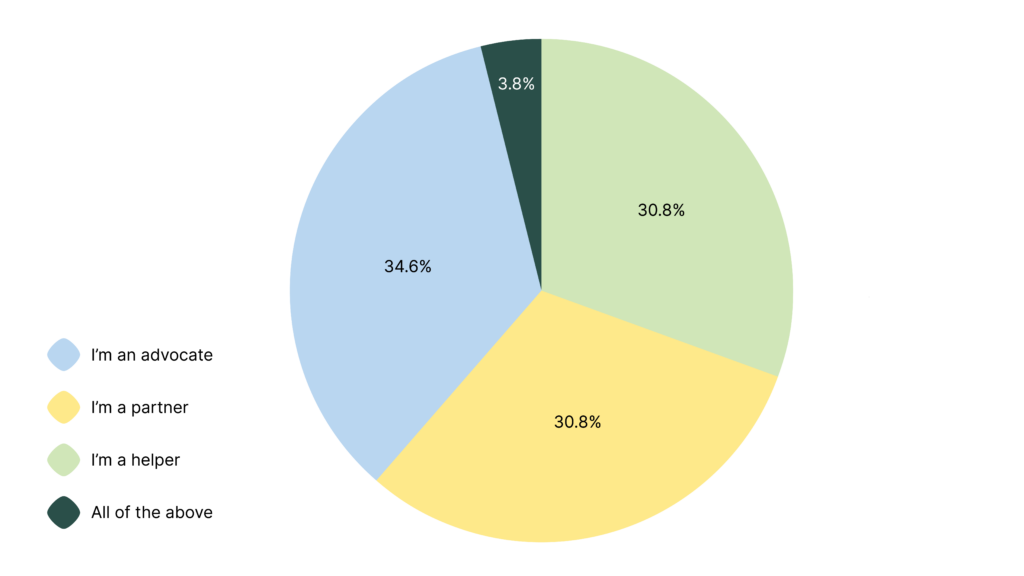
Notably, none of the volunteers described themselves as a temporary visitor or casual contributor. This tells us something important. Many volunteers see themselves as deeply connected to the organisation they support. They are invested in its future and want to contribute beyond the tasks they are assigned.
For organisations, this creates an opportunity to think differently about volunteer development. Those who identify as partners may be well placed to mentor new volunteers, while advocates may be natural champions for community outreach and awareness raising.
I see myself not just as a helper, but as a real partner to the community, because we stand side by side, working together and supporting each other every step of the way.”
Melat, Volunteer, Bradford African Community (BAC), Bradford
Volunteers want a bigger say in shaping their role
One of the strongest themes to emerge from the research was a desire for greater ownership.
While 40% of participants felt their role was clearly defined and met their expectations, 60% said they would like more opportunities to shape their responsibilities and areas of focus.
Rather than being handed a list of tasks, many volunteers wanted to work collaboratively with organisations to identify where they could contribute most effectively.
I set out my thoughts in a lengthy email to a couple of directors, expecting I might be politely asked to ‘leave it there’ for overstepping. Instead, I was phoned up by a director who thanked me. I was invited to head office to present my thoughts to the Trustees, which led to them hiring a new member of staff to improve the system.”
Volunteer survey participant
This reflects a broader shift in how people view volunteering. Increasingly, volunteers are looking for meaningful involvement, flexibility and opportunities to contribute their strengths.
For charities and community organisations, creating space for volunteers to help shape their role could improve both satisfaction and retention.
Hidden skills are waiting to be discovered
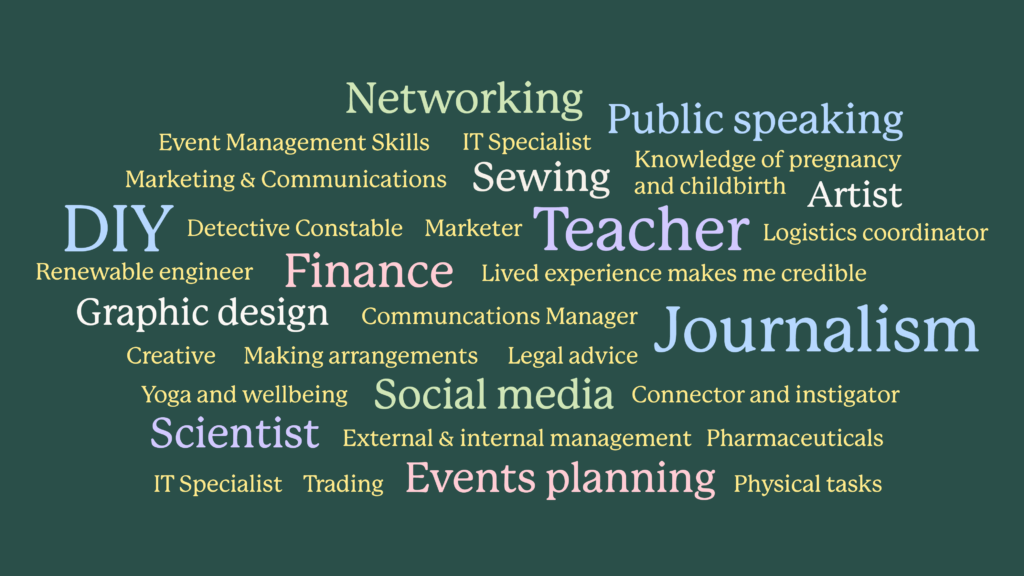
Perhaps the most striking finding was the breadth of experience volunteers bring with them. Participants shared a wide range of professional and personal skills that were not currently being used within their volunteer role.
These included:
- Scientific and pharmaceutical expertise
- Engineering and renewable energy knowledge
- Finance and legal experience
- Marketing and communications skills
- Public speaking and journalism
- Event planning and project management
- Teaching and wellbeing practice
- Information technology and digital skills
Several participants described themselves as natural connectors, bringing people together and creating opportunities for collaboration.
The findings suggest that many organisations may be overlooking valuable expertise already sitting within their volunteer community.
However, this should always be approached thoughtfully. Not every volunteer wants to replicate their professional life through volunteering. Some choose volunteering specifically because it offers a different experience or because they are looking for purpose, connection or recovery from previous challenges.
The key is creating opportunities for volunteers to share these skills if they wish to, rather than making assumptions about how they should contribute.
What this means for organisations
The research points towards a simple but important shift. Volunteers are not only looking for meaningful work. Many are looking for meaningful involvement.
They want:
- A stronger voice in shaping their contribution
- Opportunities to use their skills and experience
- Greater ownership of projects and activities
- A sense of belonging and shared purpose
Organisations that recognise and nurture these motivations are likely to create stronger volunteer experiences and more sustainable volunteer communities.
There is a desire for volunteers to give their organisation input, to help shape volunteer experience and improve systems or processes. It could create more impact.”
Volunteer survey participant
Looking ahead
Volunteers contribute far more than time. They bring lived experience, professional expertise, community connections and a deep commitment to causes they believe in.
As organisations continue to navigate growing demand and limited resources, understanding what motivates volunteers has never been more important.
The volunteers we spoke to reminded us that volunteering is not simply about giving something back. It is about connection, purpose and making a difference together.
And when organisations create the conditions for volunteers to thrive, everyone benefits.
Let’s create lasting positive change together.
Get in touch with the Magpie team today.
You can also find out more about Magpie’s expertise from over 16 years of delivering creative behaviour change in our 2026 Impact Report – Turning Ideas into Impact.