
The UK government has ambitious targets for physical activity and sustainable transport, as we can see from the third cycling and walking investment strategy (CWIS3) strategy. New cycle lanes, safer junctions and redesigned streets can make walking and cycling easier. But building new infrastructure doesn’t guarantee people will use it.
For local authorities, the challenge is helping people understand the changes, feel confident about new travel options and build different habits. That means looking beyond the physical environment to understand the motivations, concerns and everyday routines that influence travel choices.
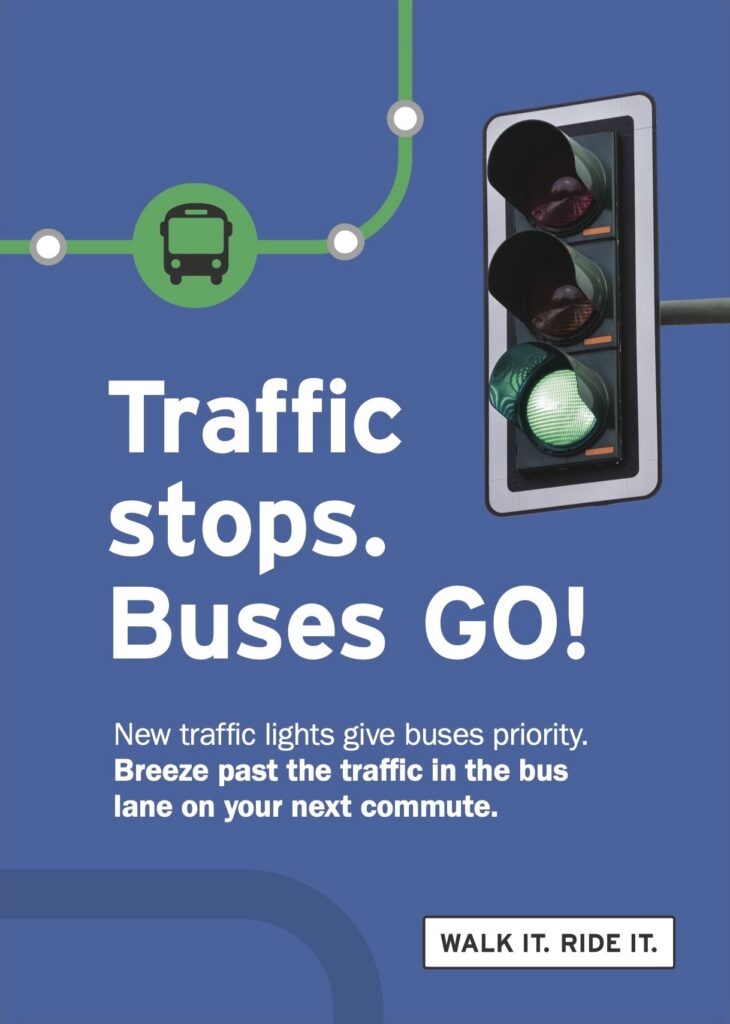
At Magpie, we use behavioural science, audience insight and community co-creation to help bridge the gap between new infrastructure and how people travel. Our Walk it. Ride it. campaign in Leeds illustrates the value of this approach. In target areas, 76% of residents were aware of the campaign, four in ten said they intended to change their travel behaviour in the future, and one in three reported walking more often.
So how can we communicate infrastructure changes in ways that build trust and encourage people to walk, cycle and use public transport? A phased, people-powered approach can help turn new travel options into choices people feel confident making.
Why new transport infrastructure doesn’t always change travel behaviour
The UK government has ambitious targets for physical activity and sustainable transport. Local authorities are investing in segregated cycle lanes, redesigned junctions and continuous footways to make walking, wheeling and cycling safer and more accessible.
But infrastructure is only part of the picture. A new cycle lane won’t automatically remove a commuter’s fear of traffic. A relocated bus stop won’t resolve every resident’s frustration with construction delays.
Changing travel habits requires more than providing a new option. We need to understand how people feel about travelling, what they want to achieve on everyday journeys and what might stop them from making a change.
This is where a behavioural diagnosis can help. By understanding people’s motivations, concerns and existing habits, we can develop communications that address real barriers rather than simply telling people what they should do.
How roadworks can create an opportunity for travel behaviour change
Major roadworks can disrupt everyday routines and create frustration. Ignoring that experience in campaign communications risks losing the trust of the people we want to engage.
Our research shows that residents can view heavily disrupted routes as an ordeal. They describe navigating roadworks as ‘carnage’ and something to ‘get through’. Some say they ‘avoid it like the plague’.
When construction is causing significant disruption, overly positive messaging can feel disconnected from people’s lived experience. It risks undermining the credibility of the organisations asking them to adapt.
But disruption can also create an opportunity to reconsider established habits.
Habit Discontinuity Theory, posited by Verplanken and colleagues (2008), explores how changes to people’s circumstances can disrupt established routines. When roadworks change a familiar journey, people may become more open to considering alternatives.
Communications should acknowledge the immediate inconvenience while explaining the longer-term benefits. This means giving people empathetic, factual updates and showing how temporary disruption connects to improvements in everyday travel.
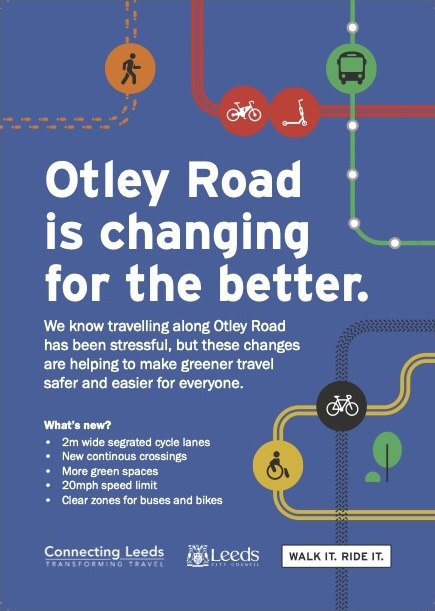
On the A660 project in Leeds, residents told us they wanted reassurance. They needed to understand how the completed works would make their daily journeys safer.
The lesson is simple: acknowledge people’s concerns, explain what’s changing and show how the finished infrastructure could improve their experience.
How behavioural insight helps overcome barriers to active travel
Effective active travel communications start with understanding the different motivations and barriers within a community.
People don’t make travel decisions based on the same considerations. Some prioritise saving money, while others are more concerned about personal safety, convenience or arriving at their destination feeling comfortable. These factors can matter more than age or other demographic characteristics alone.
We use psychographic segmentation to understand how different groups think and behave in relation to an issue. This helps us develop communications around people’s needs, rather than making assumptions based on who they are.
Three behavioural considerations are particularly important.
Make travel choices feel more predictable
People are more likely to consider a travel option when they understand what to expect. Uncertainty about journey times, connections or delays can make an alternative feel less attractive, even when it is available.
Communications can help by making practical information easier to find and understand. Clear journey times, accessible route information and reassurance about how new infrastructure works can make unfamiliar options feel more manageable.
Address the intention-behaviour gap
People may intend to travel more sustainably but still struggle to act on that intention. This is often described as the intention-behaviour gap.
For example, students may be motivated to save money and intend to walk, cycle or take the bus. But concerns about personal safety at night can override those intentions. Students tell us they choose taxis because walking alone ‘feels sketchy’.
Improving the practical conditions for safer travel matters, but people also need to understand what has changed and feel confident using the available options. Communications can help explain improvements, address concerns and make the next step clearer.
Understand the habits that keep people driving
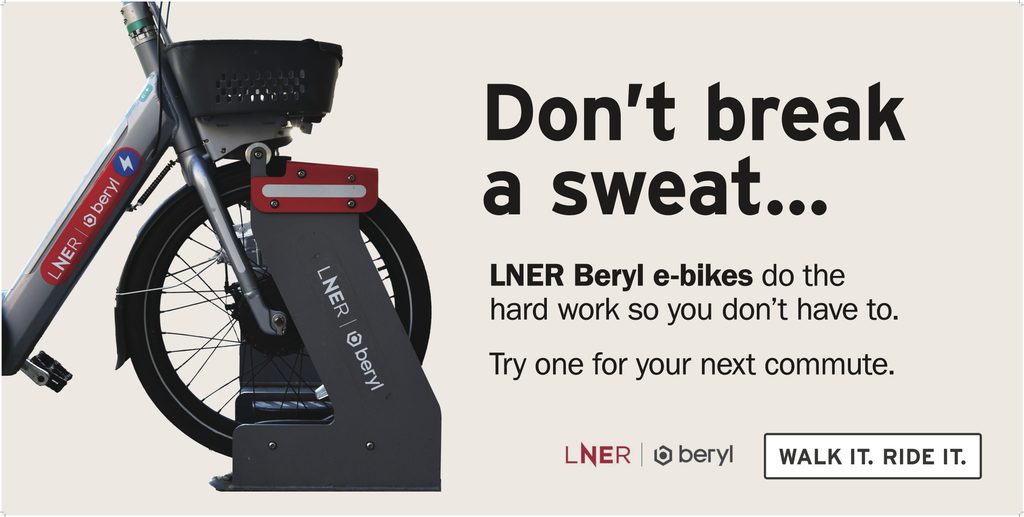
For busy commuters, driving can become an established habit. Grabbing the car keys may feel easier than checking a bus timetable or planning a different route. Some people may also worry about arriving at work sweaty after cycling.
Understanding these concerns helps us communicate the benefits of alternatives in ways that feel relevant to everyday life.
A segregated cycle lane, for example, can be explained in terms of the practical experience it offers: a route separated from traffic that may help people feel more comfortable cycling to work or university.
The aim isn’t simply to tell people that cycling is good for them. It’s to show how a particular option could work for them.
A three-phase framework for active travel behaviour change
To help communities navigate major transport changes, we use a three-phase approach to communications. Each phase responds to a different set of audience needs, from understanding why infrastructure is changing to feeling confident enough to try a new way of travelling.
Phase 1: Explain the benefits and build confidence
Before asking people to change their habits, we need to explain why the changes are happening and how they could improve everyday journeys.
If a new road layout looks sustainable in theory but feels dangerous in practice, people may avoid it. Communications should explain how the infrastructure works and address concerns about safety, accessibility and route choice.
Aim: Reassure people that the completed works can make journeys safer and easier.
On the A660 in Leeds, we used posters asking ‘Why is the bus stop floating?’ to explain unfamiliar infrastructure features.
The posters explained that positioning the cycle lane behind the bus shelter helps separate cyclists from passengers waiting at the stop. This gave people a straightforward explanation of the design and addressed potential confusion about how to use the space safely.
Phase 2: Encourage people to try sustainable travel
Once people understand the new infrastructure and feel more confident about using it, communications can encourage them to try alternatives for everyday journeys.
Short trips can provide a practical starting point. The challenge is to help people recognise that walking, cycling or taking the bus could fit into their routines.
Aim: Encourage people to consider sustainable alternatives for short journeys, particularly those under 25 minutes, by making the options feel practical and accessible.
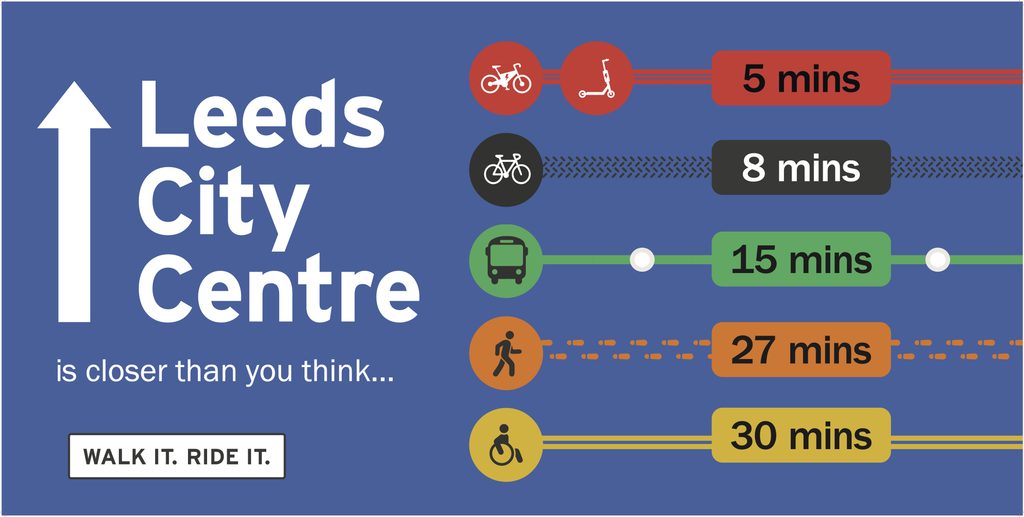
In Leeds, we used prominent wayfinding graphics along the A660 corridor, displayed on digital screens and lampposts, to show journey times in minutes rather than miles.
For someone frustrated by traffic or waiting for a delayed bus, seeing that a cycle journey to the city centre takes just eight minutes can make an alternative feel more achievable.
By providing relevant information at the point of decision-making, communications can help people reconsider their usual choice.
Phase 3: Help people take the next step
Different audiences may need different kinds of support to move from considering an option to using it.
Some people need practical guidance. Others need reassurance about safety, reliability or how a service works. Communications should respond to the specific barriers identified through audience research.
Aim: Address the remaining barriers to action with practical information and guidance.
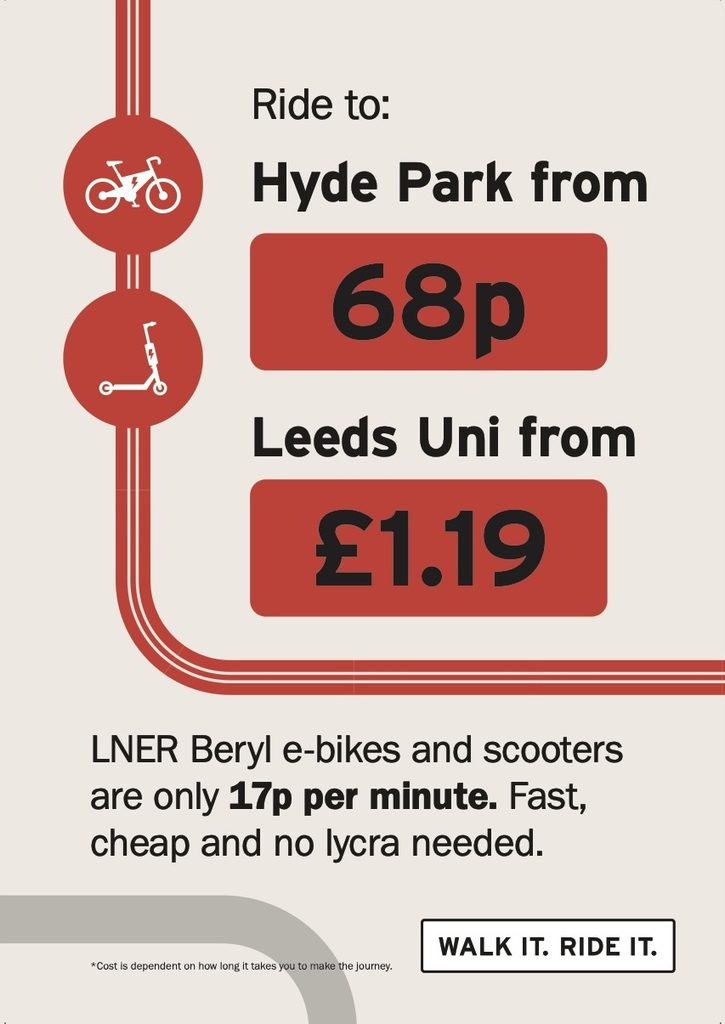
For students who feel intimidated by e-bike hire, we recommended short, peer-created point-of-view videos on TikTok. A video titled ‘Come with me to uni on a Beryl Bike’ could demonstrate how to unlock a bike and ride safely.
For commuters worried about bus delays, communications can highlight the reassurance offered by live-tracking apps and bus priority measures.
The principle is to give people the information they need at the point when they are preparing to act. The more relevant and practical the support, the easier it can be to take that next step.
Why community co-creation matters for active travel campaigns
Infrastructure communications should not feel like a top-down instruction. People want to be included in changes that affect their neighbourhoods and everyday journeys.
At Magpie, we use an asset-based community development approach to help campaigns reflect local knowledge, priorities and lived experience. We test messages and creative materials with residents to check that the language feels relevant, accessible and respectful.
This helps us avoid communications that preach or place moral pressure on people to change. Instead, we can understand what matters to different communities and develop messages that address their concerns.
We also work with social prescribers and healthcare professionals to support referrals into active travel initiatives, including in areas affected by health deprivation.
Case studies and relatable stories can help people see others like themselves trying a new behaviour. When people see their own experiences reflected authentically, a new way of travelling may feel more familiar and achievable.
Community involvement isn’t an optional extra. It helps ensure communications are grounded in the realities of the people they are intended to reach.
Turning new transport infrastructure into lasting behaviour change
Whether a local authority is delivering a major transport upgrade or an employer wants to reduce commuter emissions, the challenge is similar: providing a new option doesn’t automatically mean people will use it.
Effective behaviour change communications connect infrastructure improvements with the way people think, feel and make decisions about everyday journeys.
That means acknowledging disruption, understanding different motivations and barriers, explaining the benefits clearly and giving people practical support to try something new.
A phased approach helps communications respond to people’s needs over time, from building understanding and confidence to encouraging trial and supporting action.
When behavioural insight and community experience inform the process, communications can help bridge the gap between infrastructure improvements and how people travel.
Help people make the most of new transport infrastructure
New cycle lanes, redesigned junctions and better walking routes create opportunities for change. But to turn those improvements into everyday habits, people need to understand the benefits and feel confident using them.
At Magpie, we combine behavioural science, audience insight and community co-creation to help local authorities develop communications that address real barriers and encourage people to walk, wheel and cycle more.
Talk to Magpie about active travel behaviour change.
Planning a transport project or looking to increase active travel in your area? Let’s explore how a people-powered approach could help your community make the change.
Contact us