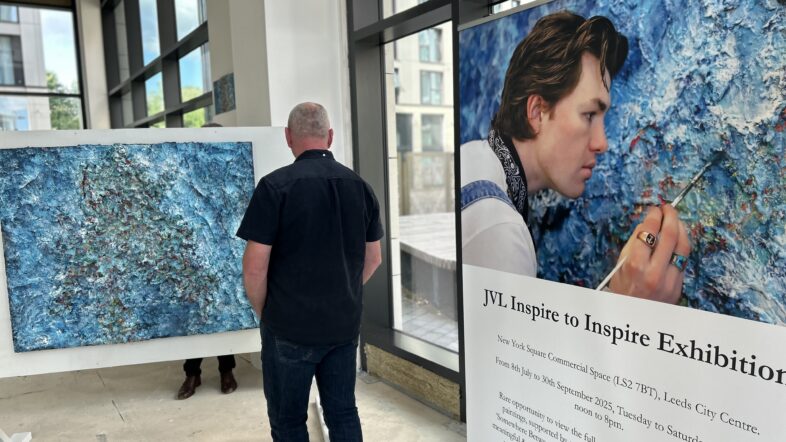
In the world of public health, we are often tasked with solving ‘challenges’ like persistent health inequalities, vaccine hesitancy, or chronic disease prevention. Often these are less effective when delivered with a traditional, top-down intervention. As we look toward the upcoming BSPHN (Behavioural Science and Public Health Network) Conference, one thing is becoming increasingly clear: data tells us what needs to change, insight tells us why, but creativity provides the inspiration for how people can feel and act on it.
At Magpie, we believe that to achieve modern public health aims, we must bridge the gap between clinical evidence and the messy, beautiful reality of the human experience.
A shift toward ‘Creative Health Systems’
We are witnessing a shift in how the UK approaches wellness. Not just a ‘nice-to-have’ add-on, the arts are being increasingly recognised as imperative to our regional health and wellbeing infrastructures.
Greater Manchester recently became a dedicated Creative Health Region with a strategy that embeds creativity into the heart of their health and social care systems. West Yorkshire is currently developing a Creative Health framework that recognises the arts as a powerhouse for prevention.
The National Centre for Creative Health defines this as a holistic approach: from visual arts and music to gardening and cooking, these activities contribute to the prevention of ill-health and the management of long-term conditions across a lifetime.
The economic case
A 2024 DCMS-commissioned report, ‘Monetising the Impact of Culture and Heritage on Health and Wellbeing’, estimated that engagement in culture delivers a staggering £8 billion per year in society-wide health benefits. Notably, this is a conservative figure, as it doesn’t yet account for the massive savings generated by reducing the direct demand on our NHS and social care services.

Image: Magpie Cofounder, Ged Savva, with York Stage Theare Company, Photo: Kirkpatrick Photography
More than theory: Creativity in action
Magpie’s heritage is built on this intersection. For me personally, whether I’m sitting on the Industry Advisory Board for the University of Leeds, infusing behavioural science and creative thinking into the curriculum, performing in a theatre or serving as a board member for dance companies, my goal is always the same: to prove that creativity is a practical tool for serious change. Here at Magpie, we use creative health strategies to drive measurable public health outcomes.
Ged Savva, Magpie Co-founder
Turning the tide on opioids and tobacco
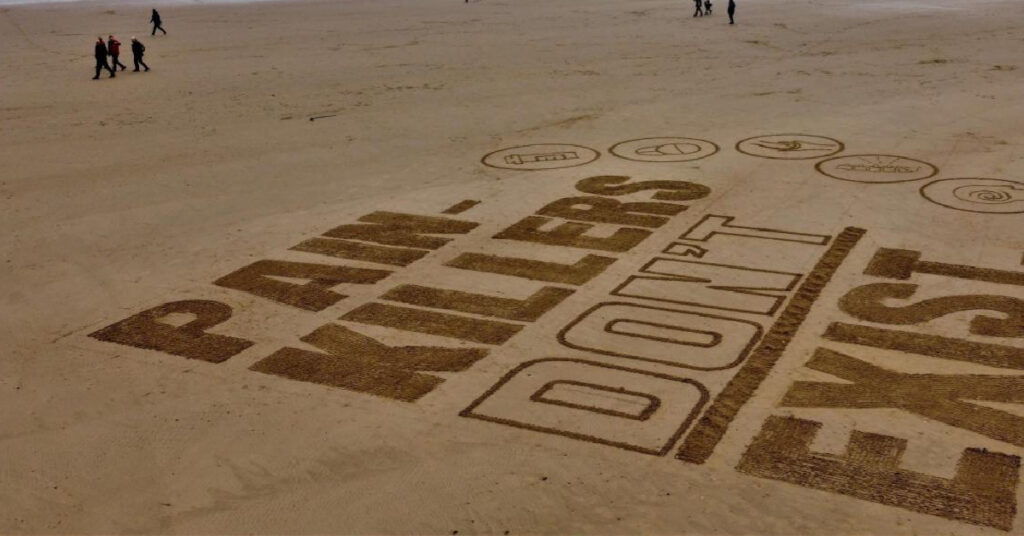
Image: Using sand art in Sunderland to launch a campaign to reduce opioid dependency
In the North East, we’ve commissioned large-scale sand art for an intervention to address painkiller dependency. This wasn’t just a visual stunt; it contributed to a monumental 54% reduction in high-dose opioid prescriptions across the North East and North Cumbria. That represents thousands of lives changed by rethinking how we communicate about pain.
In South Yorkshire, we used street art to celebrate a new social norm: the fact that 96% of people choose not to smoke on Hoyland’s High Street. This creative intervention helped Hoyland become the first smoke-free high street in Barnsley, an intervention that aimed to breathe new life into the high street via shop signage and place-making branding to drive footfall. Our approach was to advise that public spend could go beyond a public health poster campaign, it can work to support local independent retailers and community.
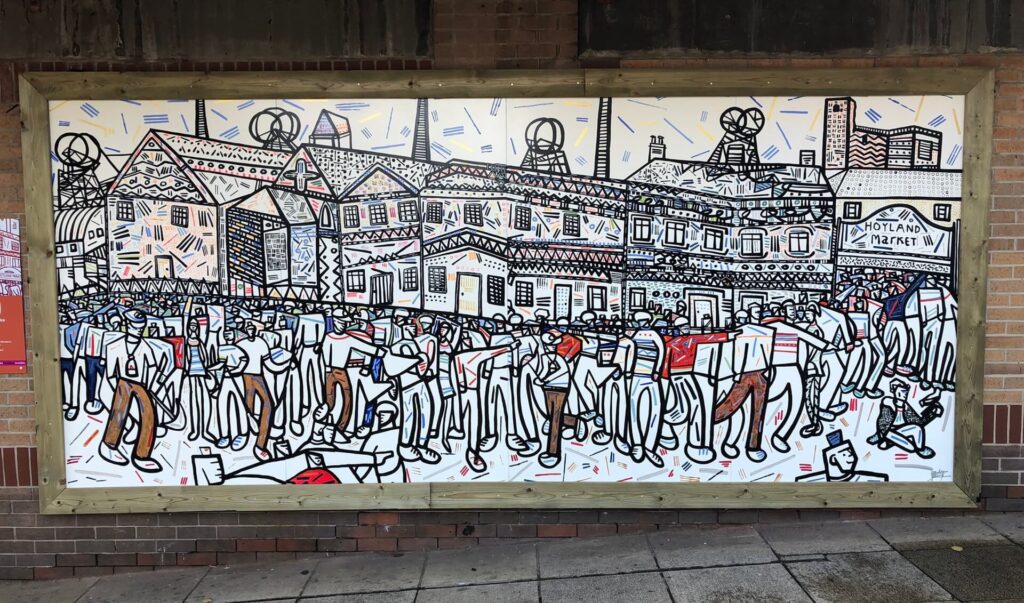
Image: Artist Ben Mosley’s mural was part of a high street rebrand combining creative arts and smokefree messaging
Collaborative experiments
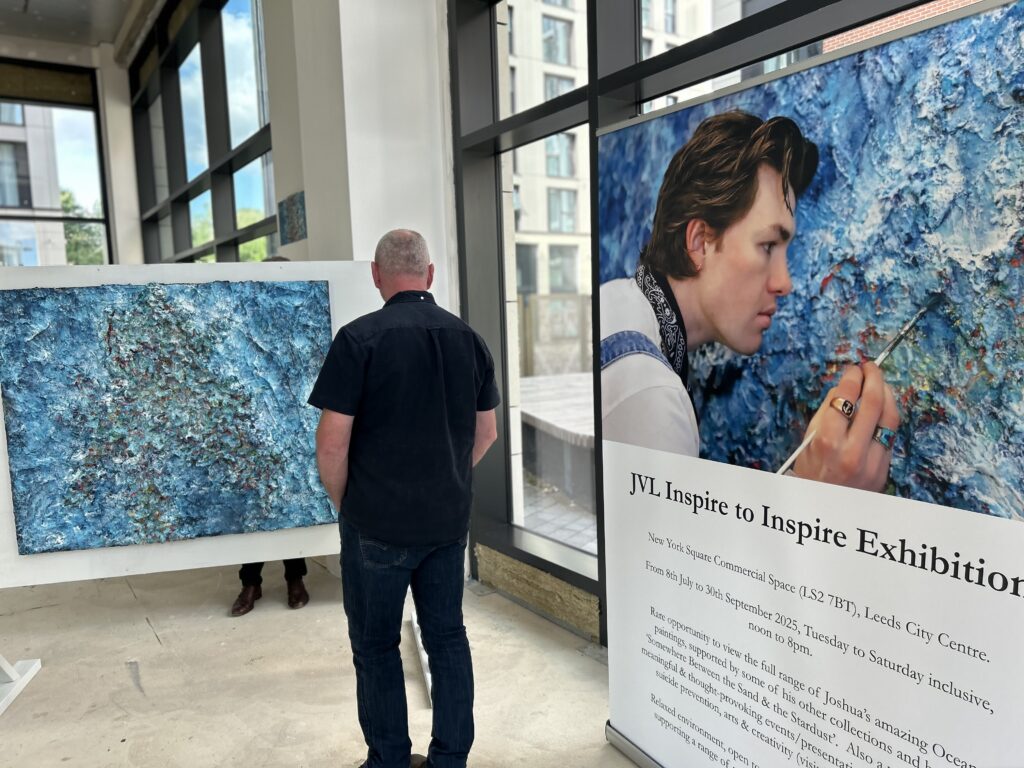
Image: The ‘Inspire to Inspire’ exhibition and events series captures the intersection between the arts and wellbeing
Social Prescribing: We recently supported the ‘Inspire to Inspire’ exhibition at New York Square in Leeds honouring the legacy of the late Joshua Van Leader (JVL). For three months, we helped brand and program a space for workshops and performances that acted as a hub for mental health advocacy and community connection positively impacting thousands of visitors.
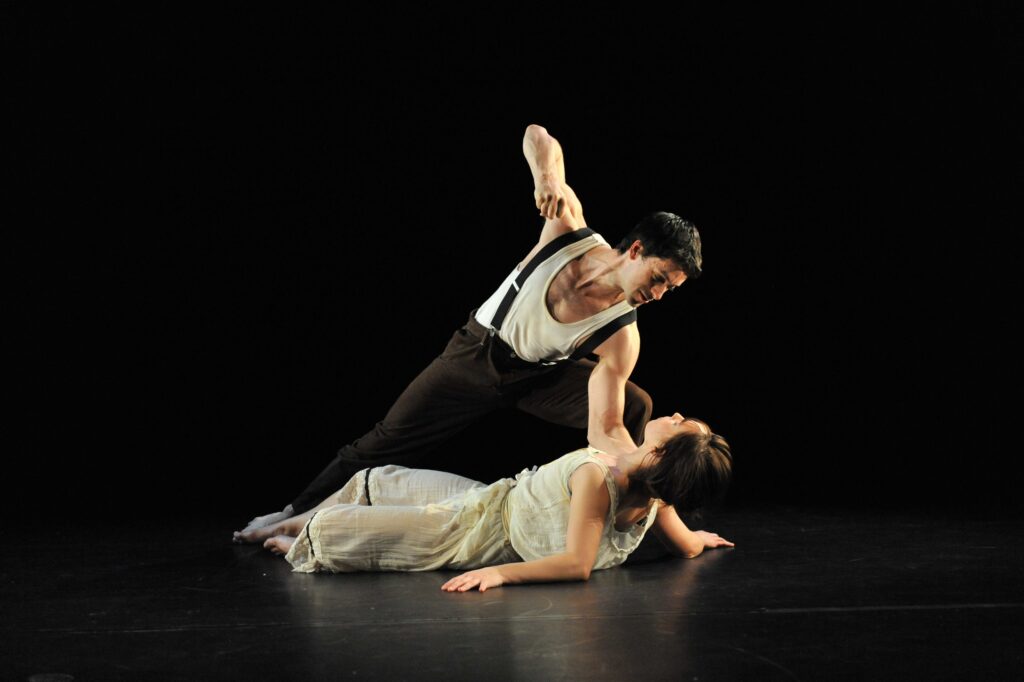
Image: Slanjayvah Danza’s ‘Crazy Joanna’, Marketing by Magpie, Photo by Brian Slater
Movement as message: We connected social worker Doreen Murdin with choreographer Jen Wren. A dance theatre production created about domestic violence didn’t just tell a story; it helped launch a new book on the topic and created a genuine behavioural shift in how the audience perceived and discussed domestic abuse.

Image: Connecting Leeds Refugee Forum with a Rewilding Britain creative brief in order to learn about wildlife and nature
Amplifying voices: From producing the ‘Mandala’ live-streamed community theatre experiment with Artists North to collaborating with the arts class at Leeds Refugee Forum, we ensure health messaging is co-created with the people it’s meant to serve.
Working with Magpie has been a transformative experience… Their creativity and deep understanding of community needs have driven real social value… inspiring lasting positive change in health and equality.
Ali Mahgoub, CEO of Leeds Refugee Forum.
Encouraging client wellbeing through Creative Retreats
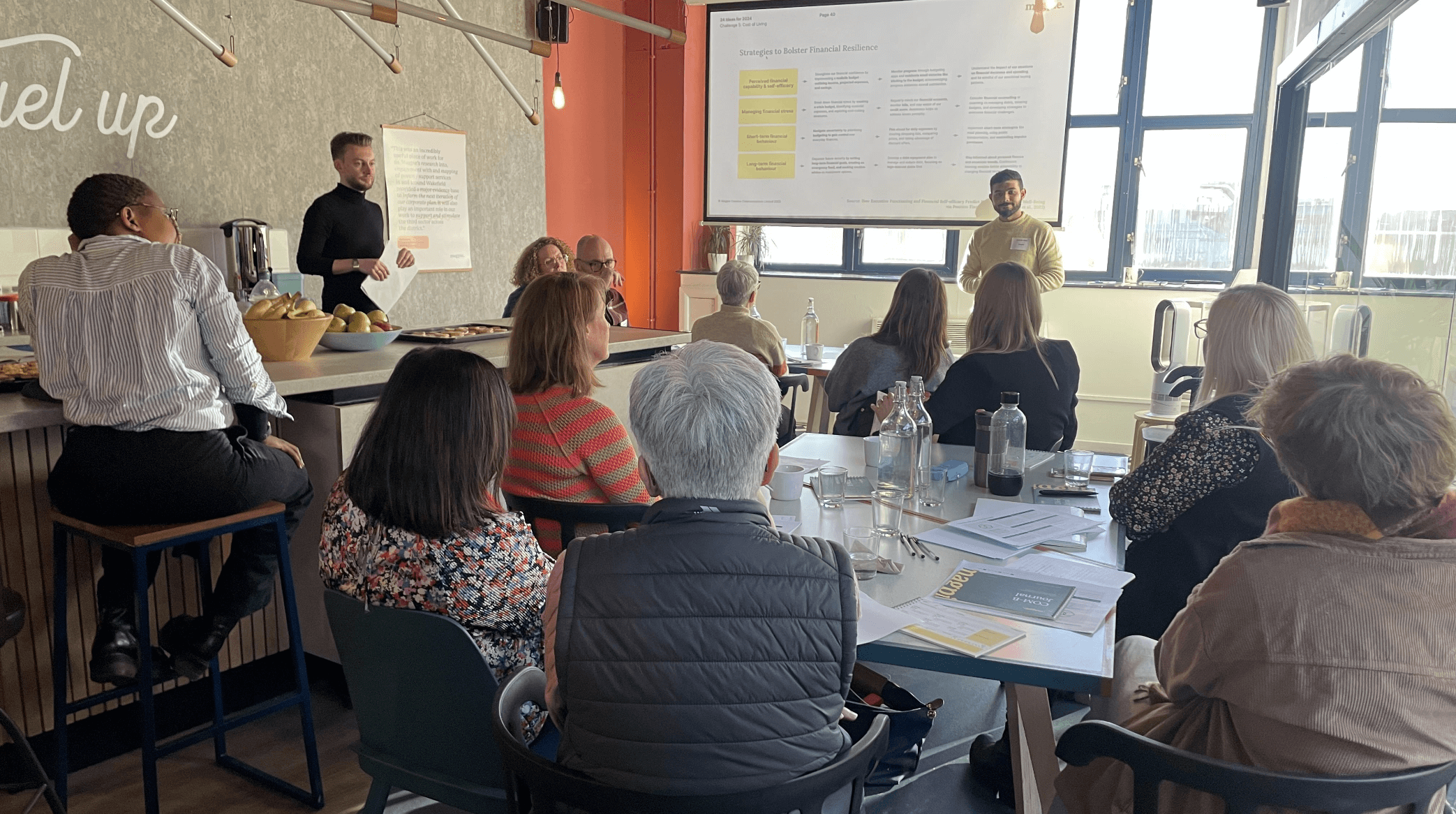
Image: ’24 Ideas for 2024′ a quarterly behavioural science, arts and culture Creative Retreat at Magpie’s HQ
We know that public sector leaders are facing unprecedented challenges. Recently, we hosted a series of Creative Retreats for over 80 clients, featuring behavioural scientists and psychologists, music psychologists, visually impaired dancers, artists, presenters and cultural intelligence experts. These sessions addressed the ‘heavy’ stuff including AI integration, financial resilience, and authentic EDI through a creative lens.
The positivity of presenters was a real boost… it has given me food for thought and resources I will certainly be using.
Maureen Hanniffy, Sheffield Council, (Creative Retreat Attendee)
The way authenticity was encouraged felt brilliant and unique. I felt like the team at Magpie really ‘got’ what it means to deliver the value of lived experience.
Miranda Arieh, Mental Health Activist & BBC Presenter, (Creative Retreat Attendee)
Why Behavioural Science, Public Health and Arts collaborations work
So, why is this intersection important for public health?
- Empathy over information: Behavioural science identifies the barriers, but the arts dismantle them by connecting with people on an emotional level.
- Multisensory engagement: Unlike a static leaflet, creative interventions create ‘sticky’ memories that drive long-term habit change.
- Trust building: Collaborating with artists brings a level of authenticity and ‘lived experience’ that institutional messaging often lacks.
- Innovation in complexity: When problems are complex, linear thinking can fail. Creativity allows us to experiment and find the ‘sideways’ solutions.
Join us and find new collaborators at the BSPHN 2026 conference
Creativity is the solution for complex problems. If you want to understand how behavioural sciences and the arts intersect, join us, keynote Daisy Fancourt who presents her book ‘Art Cure: The Science of How the Arts Transform Our Health’, and a community of innovators from 09-10 March in Leicester at the BSPHN Conference 2026.
Book your ticket here